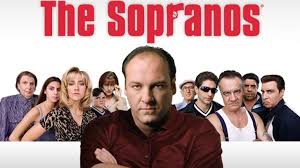
I wrote the following essay in November 2009 as part of my curriculum for my Masters Degree in Criminal Justice. If you are a fan of the HBO Television Series The Sopranos, or have an interest in criminology, you might find this paper interesting. It certainly was fun to research and write. Enjoy.
The Sopranos: A Critical Look at Criminality in America
By Gregory R. Joss (2009)
Introduction
The HBO series The Sopranos (1999-2007) is widely recognized as one of the most successful and controversial television dramas in American history. With its dynamic characters and captivating storylines, The Sopranos provided audiences with an insightful, entertaining, and humorous look into American family life – “family”, in the case of The Sopranos, has two meanings.
On the one hand, the series follows the personal and domestic family life of New Jersey mob boss Tony Soprano. For six seasons, audiences watched as Tony Soprano struggled to maintain control over his children, his marriage, and inner demons. On the other hand, we follow another family that American culture is fascinated with, the American Mafia (or La Cosa Nostra). Here we watch as Tony Soprano fights to maintain control over his illegal business enterprises in North Jersey. This is the gangster side of Tony Soprano, the one who gambles, drinks, womanizes, and muscles people around in order to keep himself in the extravagant lifestyle to which he has become accustomed. For eight years audiences watched the hero/villain Tony Soprano battle to maintain a stable domestic life while at the same time being an effective and powerful mob boss. As the tagline for the first season indicates, “If one family doesn’t kill him…the other family will” (The Sopranos 1999).
With the exception of the serial killer, perhaps no other genre of crime captures the fascination of the American public like organized crime. The mafia is one of America’s favorite pastimes. Movies such as Goodfellas (1990) and The Godfather Trilogy (1972) are staples in American cinema. Gangsters and mob themes are forever imitated, lampooned, and recreated in American culture. Images of famous gangsters from history and fiction adorn the walls of college dorms, t-shirts, the drawings of city street vendors, and many other forms of media. No other form of crime is more fascinating, imitated, and seductive as organized crime. The Sopranos in a sense have become an American icon and is among the upper echelon of media portrayals of American family life, the American gangster life, and criminality in American culture.
Although organized crime covers a plethora of criminal activity (racketeering, gambling, hijacking, murder, kidnapping, extortion, drug trafficking, etc.) the following paper will focus on three particular themes highly revealed in The Sopranos.
The first is the collateral damage from organized crime. It is a common myth that only those directly involved with the mafia or mob business are ever harmed or affected by its criminal activity. Whereas people despise the common thief and violent criminal, they typically do not share the same disdain for organized crime members. As mentioned earlier, many gangsters of often celebrated and admired. Many believe that most organized crime happens amongst organized crime members and not to Mr. and Mrs. John Q. Public. This however, as seen in The Sopranos, is far from the truth. Family members, friends, legit businesses and businessmen, law enforcement agents, politicians, and many others who cross paths with organized crime, willingly or unwillingly, often become victims of criminal activity perpetrated by mob business.
The second theme that will be analyzed is family and intimate partner violence. Intimate partner violence, whether it is physical or psychological, is largely about power, control, and entitlement (Bancroft 2002); and so too is The Sopranos. Tony Soprano and other characters are in a constant battle to gain and retain power and control over their own lives and the lives of those around them. And often times, as portrayed in the series, this struggle for power and control manifests itself in violence toward another individual; and that individual is, on occasion, an intimate partner or family member.
The final theme examined is the seductive nature of organized crime and how innocent people can be drawn into criminal and deviant activity. This notion is evident in the character, F.B.I. Special Agent Dwight Harris, and his relationship with Tony Soprano. Agent Harris on the surface is a fairly minor character (appearing in only 26 episodes), but the evolution of his relationship with Tony Soprano over the years is highly significant and suggestive of real-life events. In the end, Agent Harris plays a critical role in the conclusion of the series.
These three themes were chosen because they are outside the normal realm of discussion on organized crime. When thinking of the crime portrayed in The Sopranos it would be typical to point to the obvious – gambling, prostitution, extortion, murder, drug trafficking, etc. The three selected however are more subtle and often overlooked. Furthermore, all three themes share the common thread of being collateral damage to organized crime and the mob mentality and way of life. What this paper will reveal is how deeply rooted criminality is in American culture and how the many themes in The Sopranos reflect American family life and values.
Collateral Damage: Unintended Victims of Organized Crime
“It’s business, it’s not personal” is the underlying theme of a discussion between Tom Hagan, Sonny Corleone, and Michael Corleone in a famous Godfather scene where the three discuss an attempt on Don Corleone’s life. However, in the case of The Sopranos, “the main characters lack the Corleone family’s charisma. Rather than appearing as a sort of chivalric order with the sense of noblesse oblige of Coppola’s Godfather, Soprano and his crew would steal from their own mothers” (Proyect 2004). In other words, there is no mystical aura surrounding the Sopranos like there is around the Corleone’s. The Sopranos throws real-life issues right into the face of the audience. Mafia related violence is not exclusively gang-on-gang. Throughout the six seasons of The Sopranos we see several incidents of collateral damage; that is, innocent people brought to harm. Some cases are minor, some are extreme, and some are a constant and consistent part of life. What we learn from Tony Soprano, his friends, and rivals is that “criminality is deeply engrained in American society” (Proyect 2004) and has the potential to touch anyone. In a sense, no one is safe from the fallout of organized criminal activity and association.
The Sopranos proves time and again that collateral damage from organized criminal activity runs rampant. Examples include families who are victims of carjacking as shown in the episode “Commendatori,” truck drivers who lose their shipments to hijacking, and even a police officer who loses his job simply because he pulled Tony Soprano over for speeding (episode: Another Toothpick). Season’s three and four follow the story of New Jersey Assemblyman Ronald Zellman who is in business with Tony Soprano and the New York families. Together they engage in illegal business practices (union corruption, bid rigging, no-show jobs) as they oversee the construction of the New Jersey esplanade. Although it is a more subtle story line, this form of corruption negatively affects legit businessmen and Zellman’s constituents.
Other individuals who suffer greatly as a result of organized crime and their affiliation with Tony Soprano are Dr. Jennifer Melfi (Tony’s psychiatrist) and Tony’s high school friends Artie Bucco and David Scatino. In the final episode of season one, “I Dream of Jeannie Cusamano,” Tony explains to Dr. Melfi that her life might be in danger simply because his enemies know she has been treating him. As a result, Dr. Melfi is forced to “lam it” and get out of town until Tony can bring stability back to his illegal business. We later learn that one of Dr. Melfi’s patients committed suicide because she was not available to treat them. Melfi scolds Tony by saying that, “She [her patient] is in the ground because of you” and asking, “How many more people have to die for your personal growth?” (episode: A Guy Walks into a Psychiatrists Office). Dr. Melfi’s willingness to treat a known mob affiliate disrupted her practice and led to the death of a patient.
In the case of David Scatino, a degenerate gambler, we see that money trumps friendship in organized crime. When first introduced to Scatino, we see a very cordial and playful friendship between him and Tony. However, once Tony allows David to play in his “executive card game” (a high stakes poker game), and he gets in debt to Tony for over $45 thousand, we see the vicious and vindictive mob boss side of Tony. The episode “Bust-Out” in season two depicts Scatino struggling to pay back the money he owes Tony by squandering his son’s college tuition money, giving away his son’s car, and eventually losing his entire business. The loss is so devastating to Scatino that he almost takes his own life.
Another close friend of The Soprano family who falls victim to organized crime business practice is chef and restaurant owner Artie Bucco. Early in the first season, we learn that Tony Soprano’s uncle is planning to stage a mob hit in Bucco’s restaurant. Fearing the hit will be bad for Artie’s business, Tony burns down the restaurant. Although the arson investigator rules the fire an accident, Artie later learns Tony was responsible. Artie’s emotional trauma and volatile relationship with Tony as a result becomes a running theme throughout the series.
Perhaps the most prevalent and ongoing example of collateral damage in The Sopranos is the harm done to the children and families of organized crime members. We see children and wives suffer emotional trauma and financial crisis as a result of mob members who end up in jail, witness protection, or in the grave. Harm done to children is best expressed through the Soprano children Meadow and A.J.
Throughout the series, we see A.J. and Meadow Soprano reap and suffer the spoils of being the children of a known gangster. They are subject to witnessing the arrest of their father, having their computers confiscated by the F.B.I., and judgment by their teachers and peers. Early in season one, a classmate of A.J.’s refuses to settle a dispute “playground style” because of his father’s reputation. A.J., who does not understand simply thinks the other kid was scared to which another classmate responds sarcastically, “Oh yeah, he’s real scared of you” (episode: Meadowlands). Meadow, who originally set out to be a pediatrician, decides in the final episodes of the series to pursue a career in law. She explains to her father that maybe things would have been different if she “hadn’t seen you [her father] dragged away by the F.B.I. all those times” (episode: Made in America). Meadow and A.J. constantly rebel against the Soprano lifestyle through unruly behavior in school, with friends, and in the home. Sarcastic and antagonizing remarks about their father’s business are dropped in conversations throughout the series. More extreme forms of rebellion are Meadow’s threats to flee to Europe and A.J.’s attempted suicide. Not that children of “normal” families are exempt from such behavior, but there is no denying that the stress and instability that Tony brings into the home as a result of his illegal business is detrimental to his family.
There are other examples still. The characters Carmela Soprano, Adriana La Cerva, and Bada Bing! stripper Tracee all serve not only as examples of collateral damage, but also as victims of intimate partner and family violence.
Family and Intimate Partner Violence
Examining family and intimate partner violence (IPV) in The Sopranos is a two part analysis. The first requires looking at the mentality that exists amongst members of La Cosa Nostra and the second is looking at how that mentality is a catalyst for the mental and physical abuse of others. Furthermore, we see that family and intimate partner violence are not only themes in and of themselves, but also examples of collateral damage, which again, is the common thread linking the crimes illustrated in this paper.
“The theme of The Sopranos is Power” (Moore 2006) and so too is the underlying cause of family and IPV. Male domination, physical strength, and sexual prowess as demonstrated by Tony Soprano and his crew are seemingly essential characteristics of effective mob bosses. Tony Soprano, on the surface, is the embodiment of the ultimate male mafia leader. He is secure in family, but sleeps with as many women as he wants. “He spends most of his time with his male friends, shooting the breeze, drinking in bars, watching topless dancers, getting into fights. He’s physically powerful, so he doesn’t have to worry about being intimidated. If someone annoys him, it’s easy for him to either beat up the offender himself, or have one of his underlings do the beating for him. If someone annoys him too much, he can, in fact, kill that person, without risk of reprisal” (Moore 2006).
A prime example of the mentality of Soprano crew members is seen in an interaction between Richie Aprile and Christopher Moltisanti. Having found out that Moltisanti had slapped around girlfriend Adriana La Cerva (who is Aprile’s niece) Richie lectures Christopher saying, “You wanna raise your hands you give her your last name…then it’s none of my fucking business. Until then, keep your hands in your pockets” (episode: Toodle-Fucking Oo). Viewers are right to feel appalled by Richie’s proposition; notice he is not upset with Christopher for the act of slapping Adriana, but rather for slapping her when she is not his wife. It indicates that physical abuse against women is acceptable in the mob culture, if the woman in question is your spouse. In fact, one can infer that Richie’s scolding of Moltisanti is more about reaffirming his own power and respect rather than an effort to protect his niece. Unfortunately, this philosophy is not limited to mob culture; it could very well be found in any household across America. What’s more interesting is that Richie eventually becomes engaged to Janice Soprano (Tony’s sister) whom he punches in a domestic dispute. Consequently, Janice shoots Richie twice in the chest, killing him, and illustrating a classic example of a battered partner striking back at her abuser (episode: The Knight in White Satin Armor).
Tony Soprano’s volatile relationship with the various women in his life (wife Carmela, sister Janice, mother Olivia, daughter Meadow, Dr. Melfi, and numerous goomahs) are all worthy of their own lengthy examination and inquiry. For the sake of this analysis however, the relationship Tony has with his wife Carmela best demonstrates the mentality of mob family values and violence.
Again, the relationship between Tony and Carmela could be analyzed to no end, but it serves here as an example of the double standard held against women involved with the men in the Mafia. While Tony and friends are free to hang out at strip clubs and sleep with their goomahs, the women in their lives must “adhere to feminine prescriptions for good mothering, sexual fidelity, and sobriety” (Ferraro p. 44). The inner struggle and psychological abuse Carmela endures as a result of Tony’s philandering, is the ultimate example of a violent domestic life. Although Tony never physically abuses Carmela, he does use physical displays of dominance and threats of violence to assert his power over her. The psychological abuse Carmela has suffered explodes in Tony’s face in her famous meltdown in the episode “Whitecaps” at the end of season four. Carmela having finally had enough of Tony’s infidelity disrupting their home throws him out of the house and eventually pursues a divorce. Further evidence of this double standard is seen in season five when Carmela engages in a relationship with A.J.’s teacher, Mr. Wegler. Despite the separation from Tony, Carmela pursues the relationship in secret for fear of her life and the life of her lover. In fact, one scene shows Carmela sleeping with a gun under her pillow after a sexual encounter with Wegler (episode: Sentimental Education). Even in separation, Tony’s power and hold over Carmela is a formidable presence.
A common question that arises in domestic violence and IPV discussion is “why doesn’t she just leave him?” (Bancroft 2002). Anyone who understands the dynamics of domestic violence knows the answer to this question is highly complex. Those who understand the mentality of Tony Soprano and his associates know that no one walks away from “this thing of ours”[i] (The Sopranos 1999). No one can leave the Soprano family – the business family or the domestic family.
Although not essential to the overall plot and story of the Soprano family, the episode “University” in season three exemplifies how The Sopranos portrays “gendered violence in media culture” (Feminist Studies 2007). The interaction between Soprano crew-member Ralph Cifaretto and Bada Bing! stripper Tracee in “University” illustrates women as fallen victims trying to redeem themselves and capture the classic notion of the American dream. In “University” Tracee has a relationship with two men, boss Tony Soprano, who she views as a father figure from whom she is seeking approval and boyfriend Ralph with whom she wants a family life. “University mobilizes this contrast between utopian and dystopian visions of home in the service of Tracee’s complex characterization as a fallen woman with class-driven aspirations to redeem herself in the eyes of her gangster boss and boyfriend, thereby gaining access to the good life” (Feminist Studies 2007). Tracee’s character plays to the myth and misleading notion that social- status and a stable home life is free of violence. “Middle and upper-class homes are not necessarily free of spousal abuse and other sexist social ills. Through strategic editing, ‘University’ echoes this insight, repeatedly collapsing the violence of strip club spaces against the performed comfort of home life to underscore the continuities between stigmatized and socially sanctioned arenas, asserting that they are not as separate or opposite as our symbolic register suggests” (Feminist Studies 2007). For example, Ralphie laughs from his window as Bada Bing! owner Silvio slams Tracee’s head against the hood of his car. The scene then cuts to Ralphie laughing at a dinner party with girlfriend and high-status mob widow Rosalie Aprile where the conversation is structured around stereotypical male vs. female dialogue.
Tracee’s fate is death at the hands of Ralph Cifaretto, which causes a rift between Tony (her father figure) and Ralph (her boyfriend). In the end, Tracee’s death is dismissed proving the point that no woman, regardless of status, is free from the grasp of IPV. As Tony vents his disgust for Ralph’s actions to Consigliere Silvio, Sil responds, “She was not related to you by blood or marriage, she was not your goomah” (episode: He is Risen). Again, much like the incident between Christopher and Richie, the actual act of beating Tracee is not what is ultimately important, but rather her status in relation to men. Harmony amongst Tony, Ralph, and other crew members far outweighs any justice or concern for Tracee.
Much like the previously listed examples of collateral damage, the business always comes first; and business is not merely gang-on-gang violence. Friendships, relationships, and even family members are frequently harmed in the name of doing business.
Seductive Nature of Crime
As shown above, the collateral damage inflicted by affiliation with organized crime members knows no boundaries. Family members, girlfriends, friends, and many other innocent people are victims of criminal activity that surrounds the Soprano lifestyle. In part, the reason behind this has a lot to do with the seductive nature of organized crime and the mafia lifestyle. As previously mentioned, America is fascinated with movies like The Godfather, Goodfellas, and Scarface. Several characters in The Sopranos further illustrate this fascination and demonstrate how criminality is deeply embedded in American culture. Even though we may view some of them as victims, it is impossible to overlook how characters such as Dr. Melfi, Artie Bucco, and David Scatino are intrigued and drawn towards a man like Tony Soprano. Tony and the mob lifestyle are seductive and portrayed as being bigger than life. Throughout the series we see a number of people (A.J.’s friends, Tony’s goomah’s, and Dr. Cusamano and friends) getting a thrill by living vicariously through the Soprano family. Even F.B.I. Special Agent Dwight Harris is not immune to the allure of organized crime.
Agent Harris is an allegorical character in that he in part represents real life F.B.I. Special Agent R Lindley DeVecchio. DeVecchio, who headed the task force trying to end Brooklyn’s Colombo crime family war, made headlines in the late ‘90s after being under investigation for allowing his relationship with F.B.I. informant and gangster Gregory Scarpa go beyond accepted F.B.I. protocol. “As were many scenes and subplots in the award-winning series, actions between Agent Harris and Tony Soprano were loosely based on real-life facts, or as in this case, real-life allegations” (Capeci 2007). Although mostly a minor character through the first five seasons, Agent Harris’ actions in season six mirror those of DeVecchio’s, as he plays a pivotal role as an ally to Tony Soprano in his war against New York Boss Phil Leotardo.
We are first introduced to Agent Harris in season one in the episode “The Legend of Tennessee Moltisanti.” Harris, along with other agents, greets Tony at his home with the intent of executing a search warrant. During the search, Tony insults one of the agents, Agent Grasso, by saying something derogatory in Italian. Grasso reacts aggressively which forces Agent Harris to step between him and Tony. This position, Harris standing between Tony and the F.B.I., is symbolic of the role Harris will play throughout the series. The line Agent Harris must draw between friend to Tony Soprano and agent to the F.B.I. slowly becomes blurred and eventually erased. Later that night at the dinner table, Tony expresses his feelings about Agent Harris. “Trust me, he was the biggest sneak out of all of them. It’s all part of his little act” (episode: The Legend of Tennessee Moltisanti). Tony was right in the sense that Harris does turn out to be quite the sneak, but not in the manner Tony originally thought.
One of the more moving and telling scenes involving Agent Harris comes in the final episode of season one. Tony is brought before senior F.B.I. agents to listen to wiretaps that were placed in his mother’s retirement community. As a senior agent explains the nature of the information on the tapes, the camera continually cuts to the face of Agent Harris who appears upset and conflicted. When Tony begins to listen to the tapes, it becomes clear that his own mother plotted with his uncle to have him killed. Tony stops the tape temporarily and as the senior agent mentions “matriarchal” values, the camera cuts to Agent Harris who lowers his eyes and shakes his head. As Tony continues to listen to the tape, he makes eye contact with Harris who appears “choked up” and on the verge of tears. The scene is very powerful and foreshadows a relationship between Tony and Harris that will go beyond the scope of agent and criminal.
Throughout seasons two through five, Agent Harris remains true to his role as an F.B.I. agent trying to build a RICO case against Tony Soprano. Nevertheless, Agent Harris maintains a cordial and respectful relationship with Tony, even taking the time to visit him at Satriale’s (Tony’s place of business) to introduce his new partner.
Season six, however, begins the transformation of Agent Harris. In the episode “Members Only” Harris and his partner come by Satriale’s Pork Store where Harris explains to Tony and crew that he is no longer with the organized crime unit, but has been reassigned to the terrorist task force. This is a simple exchange, but important conclusions can be drawn by the careful viewer. For one, no longer is the interaction between Harris and Tony invasive on Harris’ part. Tony is not being brought into custody or having his home searched; rather Harris is on Tony’s turf as a customer of the store. Second, Harris is no longer in the position to investigate organized crime and has in fact been assigned to a division that is of great interest to Tony. Throughout the series, Tony repeatedly expresses his disdain for terrorism and his concern for the safety of U.S. borders. This sets up a scenario where Harris and Soprano have the same vested interest and opens the door for them to develop a working relationship.
In the following episode, while Tony is recovering from a near fatal gunshot wound, Agent Harris (again at Satriale’s) asks Moltisanti about Tony’s condition.
Moltisanti: “I got nothing to say about what happened.”
Harris: “That’s not why I asked.”
Moltisanti: “You know what I think, I think you don’t come here for the sandwiches, I think you come here cause you miss us.” (episode: Join the Club)
This exchange demonstrates that Harris is legitimately concerned about Tony’s well being and not asking for information about criminal activity related to the shooting; even though it is clear that is what Moltisanti thinks. Furthermore, Moltisanti’s comment about Harris “missing” them was largely an insulting/sarcastic remark, there is some truth to it – the level of seduction is growing. This conversation concludes with the F.B.I. asking Moltisanti or any other members of his crew to volunteer any intelligence they might have on terrorist activity. Later in the season, Harris would ask the same of Tony, again, establishing a relationship where interests are shared.
In the episode “Kaisha” Agent Harris has a conversation with Tony where he actually volunteers information to Tony about Phil Leotardo. Harris, who still has friends in the OC unit, warns Tony that someone close to him might be in danger. At first Tony looks upon Harris with skepticism and hesitation, but then expresses thanks. Harris replies, “It’s Christmas” (episode Kaisha) implying the giving of a gift. Real-life agent Lindley DeVecchio openly admits to accepting gifts from Scarpa, which investigators speculate was in exchange for information (Moushey 1998). Tony never gives Harris gifts but does provide Harris with the names and a cell phone number of two men he suspected as having ties to terrorist activity. This is the first time the audience ever sees Tony actually cooperate with the F.B.I. Tony also asks what his reward for assisting the F.B.I. will be, perhaps setting up the possibility for the series ending with Tony as an informant.
In the second to last episode, an interesting exchange occurs between Harris and Soprano at Satriale’s. Tony asks Harris what became of the two men that he turned over to the F.B.I. and Harris refuses to answer. Tony reacts with surprise, “You’re not going to tell me?!” (episode: The Blue Comet). The emphasis on “me” makes it clear that Tony sees his relationship with Agent Harris as more than professional and that the line between agent and criminal has become quite blurred. Agent Harris, trying to maintain boundaries, is reluctant to provide any information, but ultimately decides to tell Tony that his life is in danger from New York Boss Phil Leotardo.
In the final episode of the series, “Made in America,” Agent Harris crosses the line from F.B.I. agent to de facto ally of Tony Soprano. “Agents sometimes must make deals with the devil – criminal informants – to fight crime. The temptations to become partners with these criminals can be great. And the safeguards to prevent their defections are few” (Moushey 1998). While Tony is trying to regain stability and good relations between the New Jersey families and the New York families, Agent Harris places a personal call to Tony and reveals the possible location of Phil Leotardo. The scene indicates that Harris obtained this information from an affair he was having with another agent, an act mirroring the life of Tony Soprano. Real-life agent DeVecchio is alleged to have provided Colombo capo Gregory Scarpa with the location of rival Lorenzo Lampasi.
Upon learning of Phil Leotardo’s murder, Agent Harris slaps his desk and exclaims, “We’re gonna win this thing!” Real-life F.B.I. Agent Christopher Favo testified that these were the exact actions and words of his superior, Lindley DeVecchio, upon hearing the news of Lorenzo Lampasi’s death. Favo testified, saying of DeVecchio, “He seemed like he didn’t know we were the F.B.I. It was like a line had been blurred…over who we were and what this was…He was compromised. He had lost track of who he was” (testimony of Agent Christopher Favo, Moushey 1998).
There can be little doubt that working as a partner to Tony Soprano provided some kind of a thrill for Agent Harris. His continuous visits to the pork store, his willingness to volunteer information about rival gangs, and finally his excitement over Tony’s apparent victory in the war of 2007 are all evidence that Harris was seduced by Tony Soprano and the Mafia lifestyle. It is never made clear what becomes of Agent Harris’ future in the F.B.I. Despite allegations and testimony, Agent DeVecchio never received any disciplinary action for his alleged inappropriate relationship with Scarpa. The allure of criminality in American culture is great, so great that it can even corrupt members of agencies meant to bring justice to its perpetrators.
Conclusion
The Sopranos reflects not only the typical crimes perpetrated by organized crime members, but also the subtle crimes and deviant activity that are deeply engrained in America and American mob culture. There are countless incidents of collateral damage throughout the entire series. Among the more subtle crimes and consequences portrayed in The Sopranos are family and intimate partner violence and also the ability of crime to lure innocent people to deviant lifestyles and behavior. Collateral damage is both a theme of its own and a common thread that connects the many aspects of organized crime.
The allure of The Sopranos is that there is a seemingly endless amount of topics to explore and dissect. Themes, character relationships, and criminal activities are endless and will still be subject to analysis years from now. In fact, the themes critiqued in this paper deserve more attention and could very well be the subject of further thought provoking literature. The Sopranos, much like its Mafia predecessors, has undoubtedly earned a top spot among modes of media that represent American family life and criminality in American culture.
[i] How the Mafia or La Cosa Nostra is casually referred to by its members
Download full document here: The Sopranos: A Critical Look at Criminality in America
 withtheniner